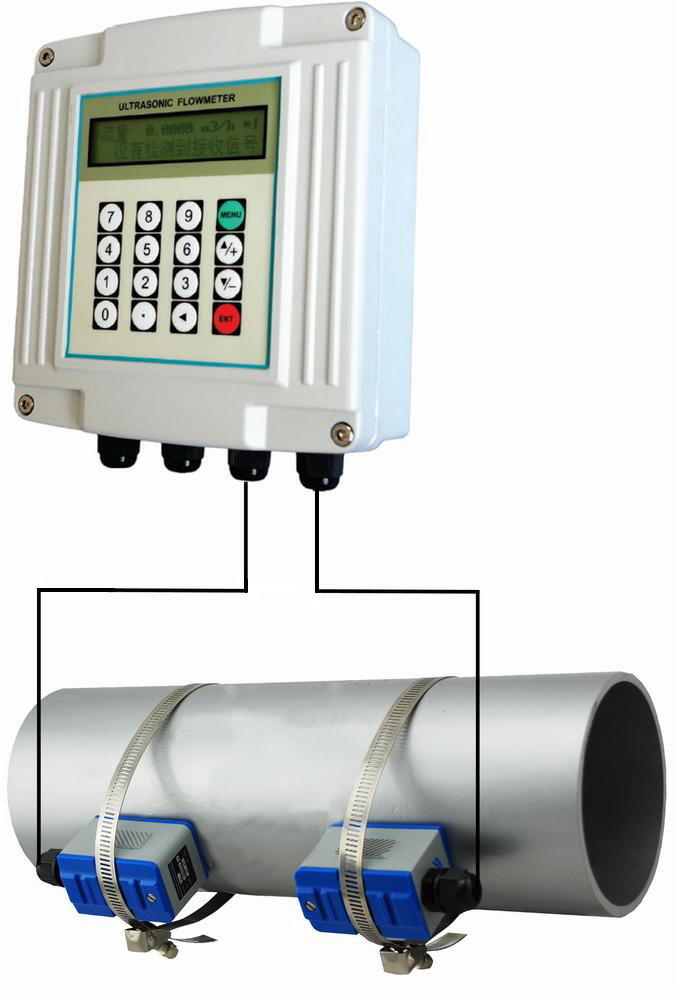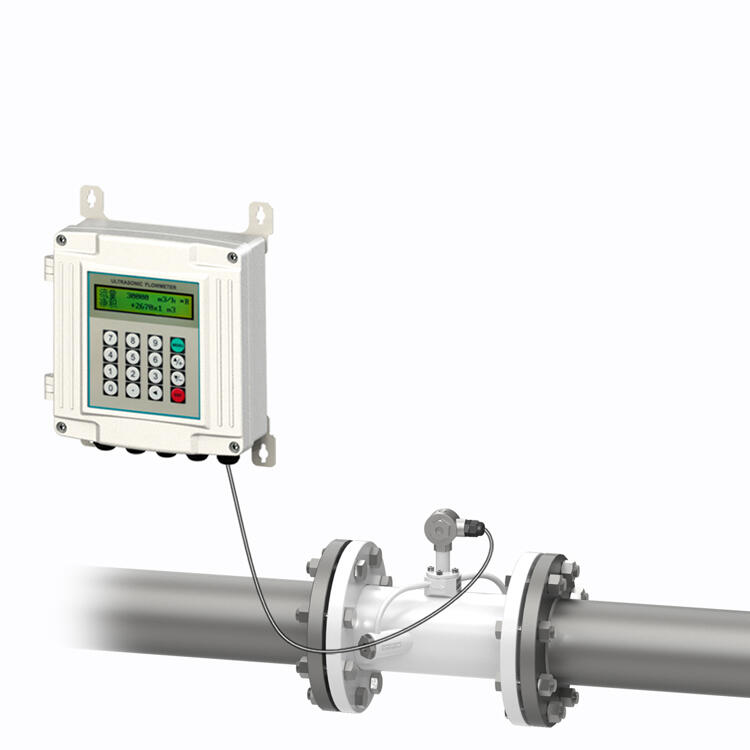
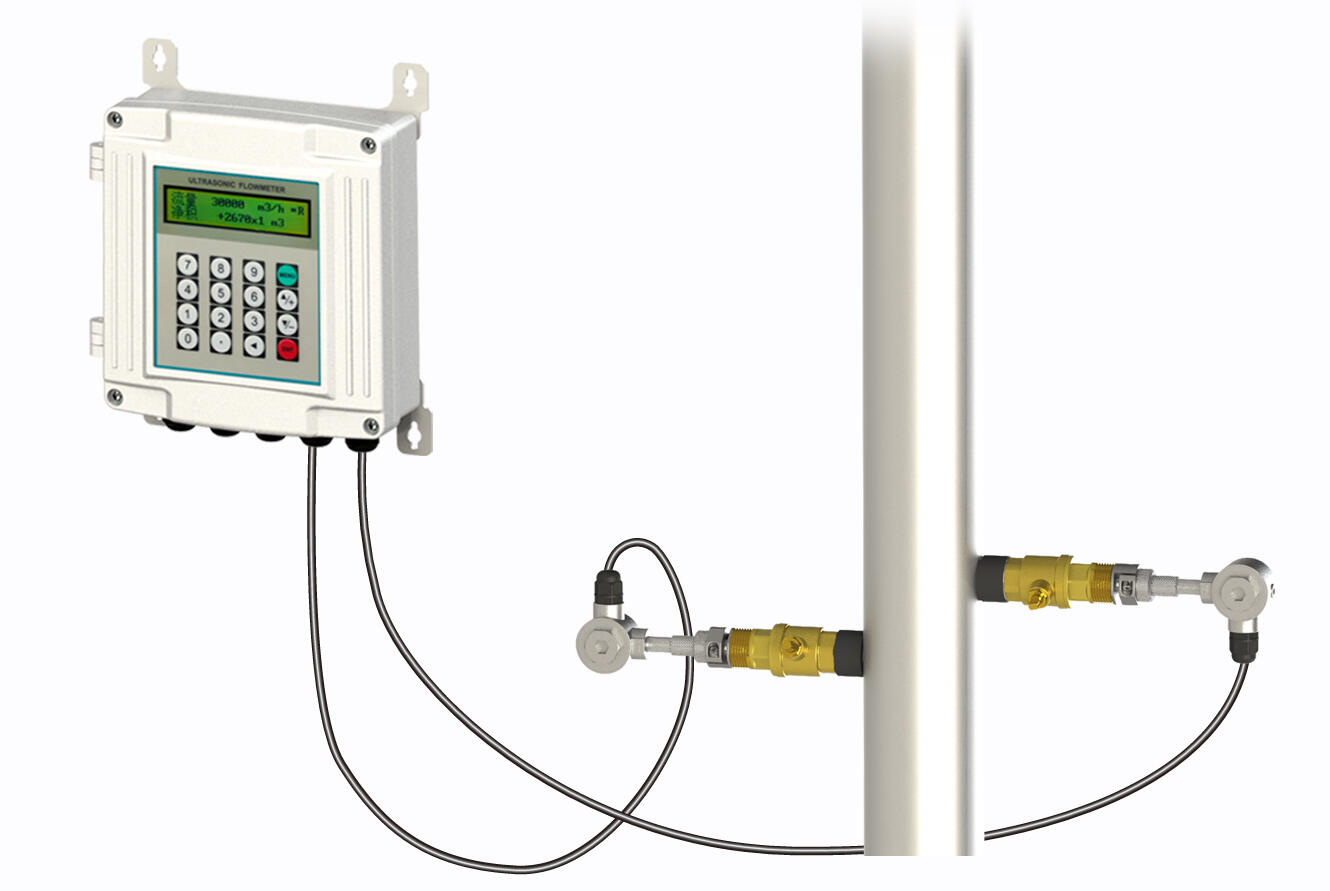
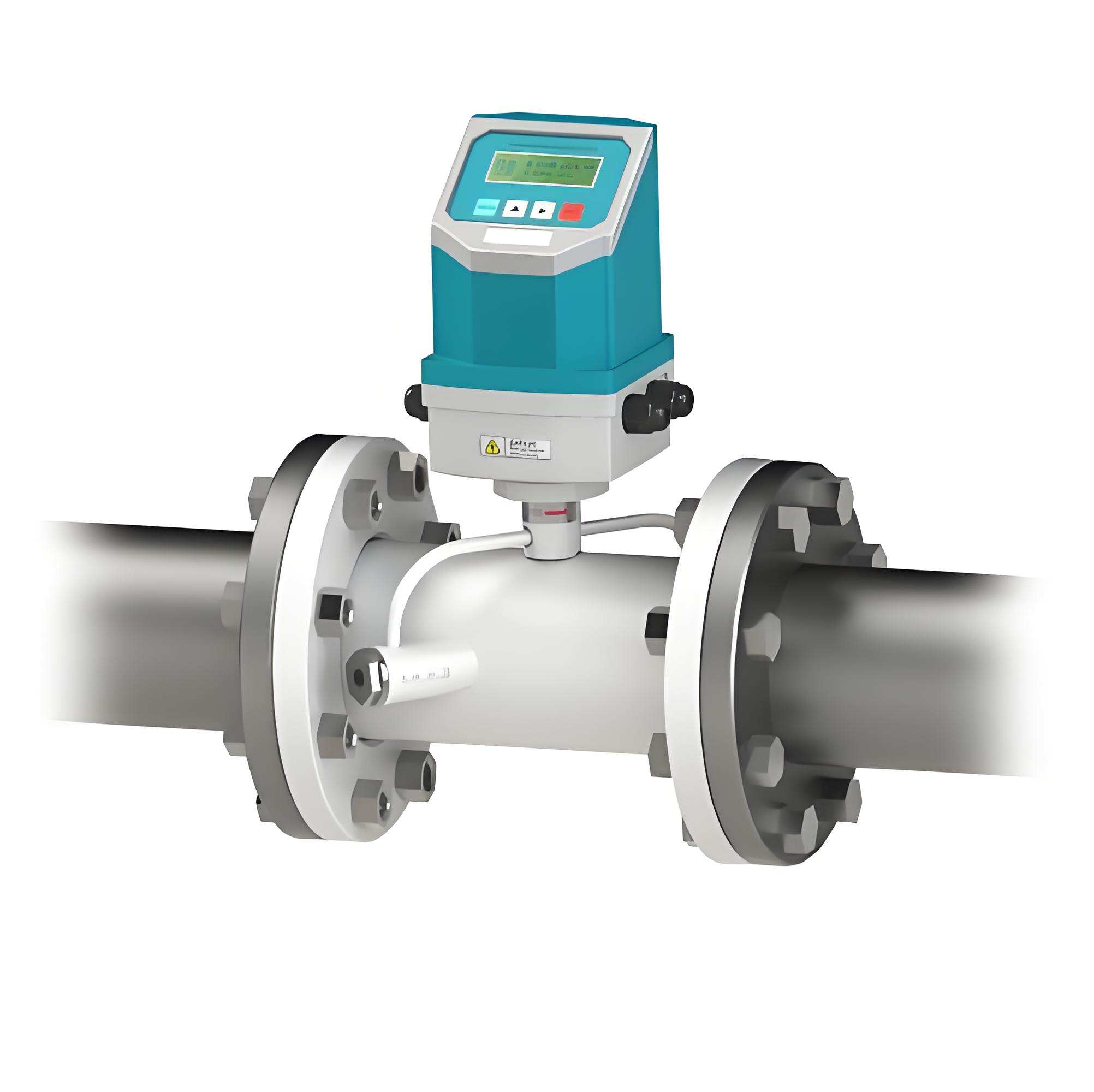
Ultrasonic flowmeter online monitoring, ultrasonic flowmeter is an instrument that measures flow by monitoring the effect of fluid flow on ultrasonic beam (or ultrasonic pulse). When an ultrasonic beam propagates in a liquid, the flow of the medium liquid causes a change in the propagation time of the beam, which is proportional to the flow velocity of the liquid. Ultrasonic flow meters use this principle to monitor the flow rate of liquid in pipelines or open channels. The external clamp type ultrasonic flowmeter can achieve high-precision measurement while reducing installation time and maintenance costs.
Characteristics:
Easy to install: No need to cut pipes or interrupt flow
Low maintenance cost: External sensors do not require regular cleaning
No movable parts prevent wear and blockage
No pressure drop or energy loss
Range width ratio
Single channel, dual channel, or multi-channel types can be selected, with multiple protective enclosures to suit the conditions and needs of each slot
Installation of ultrasonic flowmeter:
(1) Before installing an ultrasonic flowmeter, it is necessary to understand the site conditions, including:
What is the distance between the sensor installation location and the host;
2. Pipeline material, wall thickness, and diameter;
3. Pipeline lifespan;
4. Fluid type, presence of impurities, bubbles, and whether the pipe is full;
5. Fluid temperature; (Inserted sensor pipeline pressure)
6. Are there any interference sources at the installation site (such as frequency converters, high-voltage cable fields, etc.);
7. Temperature at the host placement location throughout the four seasons;
8. Whether the power supply voltage used is stable;
9. Whether remote transmission signals are needed and their types;
Based on the on-site situation provided above, the manufacturer can configure according to the on-site situation and, if necessary, can also customize the model.
(2) Select installation location
The selection of installation pipe sections has a significant impact on testing accuracy. The selected pipe sections should avoid interference and eddy currents, which have a significant impact on measurement accuracy. Generally, the selection of pipe sections should meet the following conditions:
1. Avoid installing machines in areas with strong magnetic fields and vibration interference, such as water pumps, high-power radios, and frequency converters;
2. The selection of pipes should be uniform, dense, and easy to transmit ultrasonic waves;
3. To have a sufficiently long straight pipe section, the upstream straight pipe section of the installation point must be greater than 10D (note: D=diameter), and the downstream must be greater than 5D;
4. The upstream distance from the installation point to the water pump should be 30D;
5. The fluid should fill the pipeline;
6. There should be sufficient space around the pipeline for on-site personnel to work in the trench.
Technical Specifications:
LTD-A type external attachment, LTD-B type pipeline, LTD-C type insertion
Measurement accuracy: 1%
Repeatability: 0.2%
Caliber range: DN10-3000mm
Measurement cycle: 500ms (2 times per second, 128 sets of data collected per cycle)
Working power supply: 220VAC/8-36VDC
Flow velocity: 64m/s (flow velocity resolution 0.001m/s)
Display: 2× 10 Chinese character backlit LCD can display instantaneous flow rate, positive, negative, net cumulative flow rate, flow rate, etc
Slot: 4× 4 touch keyboard (F4 host magnetic 4 keys) slot
External bound sensor:
External tied sensor is an installation method that directly binds the sensor to the outer surface of the measured pipeline to achieve flow measurement. It has the characteristics of being independent of the pipe diameter, simple installation, no need to stop production, and no pressure loss.
For more product information, please consult our toll free hotline at 400 880 6367

 language