 language
News and Information
The Company is Committed To The Production, Sales, Design, Installation, And Maintenance Of Process Instruments And Intelligent Control System Solutions.

The Company is Committed To The Production, Sales, Design, Installation, And Maintenance Of Process Instruments And Intelligent Control System Solutions.
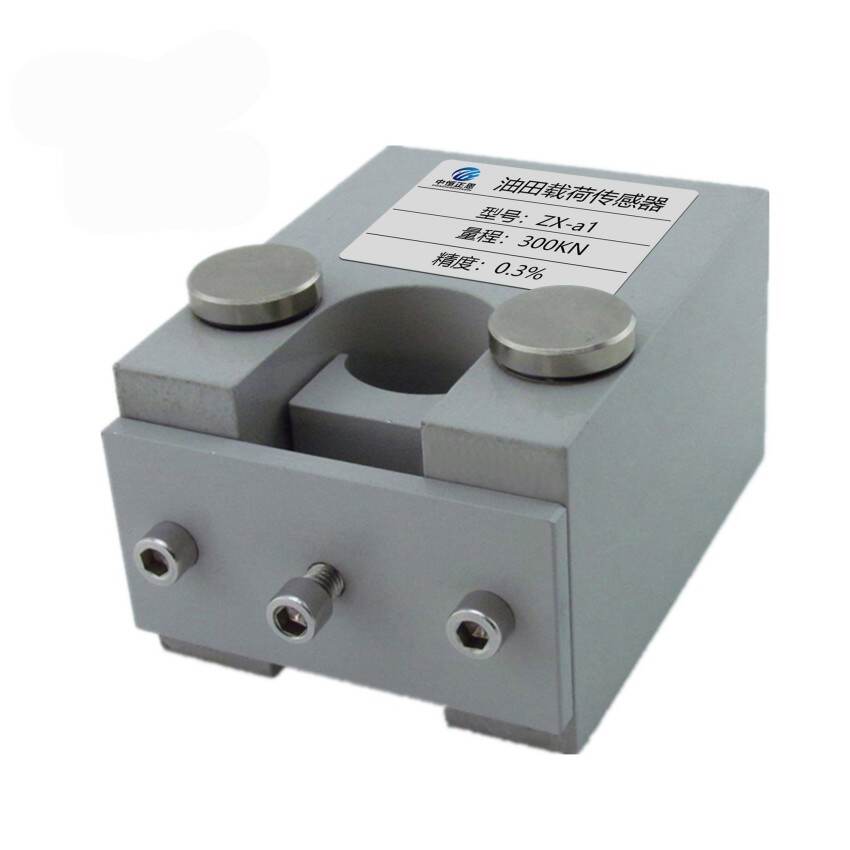
A multidimensional force sensor refers to a force sensor that can simultaneously measure force and torque components in two or more directions. In the Cartesian coordinate system, force and torque can be separately decomposed into three components.
So, there are six complete forms of multidimensional forces. A three-dimensional force/torque sensor is a sensor that can simultaneously measure three force components and three torque components. The widely used multidimensional force sensor is such a sensor.
Advantages of multidimensional force sensors:
Compared with single axis force sensors, multidimensional force sensors not only need to solve the dryness and consistency issues that are sensitive to the measured force components, but also need to deal with the multidimensional (inter axis) disturbance caused by the measured force components.
Layout handling and process errors, dynamic and static calibration issues, as well as decoupling algorithms and circuit implementations in vector operations. At present, the scientific problems in the research of multidimensional force sensors have been fully solved, such as the layout planning of elastic bodies, mechanical function evaluation, vector decoupling algorithms, etc. We have also mastered the key production technology and have the ability to plan and process from macroscopic machines to microscopic machines. Our products cover a full range of multidimensional sensors from two-dimensional to six dimensions, with measurement limitations ranging from hundreds of grams to tens of tons. We have obtained multiple technologies in elastic body layout and vector decoupling circuits.
The use of multidimensional force sensors:
Multi dimensional force sensors are widely used in robot claw research; Research on robotic surgery; Finger force research; Dental research; Force feedback; Brake inspection; Tightly assemble and cut; Repair research; Plastic surgery research;
Product testing; Tactile feedback; Actual resource network. The industry covers platforms such as robotics, automotive production, automated waterline devices, biomechanics, aerospace, and textile industry.
Layout types of multidimensional force sensors:
Multi dimensional force sensors can simultaneously detect three force messages (Fx, Fy, Fz) in three-dimensional space. Through it, the control system can not only verify and control the grip of robot claws, but also check the weight of objects and detect whether there is sliding, vibration, etc. during operation. There are two types of 3D finger force sensors: side mounted and top mounted. Side mounted multidimensional force sensors are commonly used for two finger robot grippers, while top mounted multidimensional force sensors are commonly used for multi finger dexterous hands of robots. Multi dimensional force sensors are tension sensors for intelligent robots. It can simultaneously verify all force messages in three-dimensional space (Cartesian coordinate system), including three force components and three moment components.
Multi dimensional force sensors are widely used in tight fitting devices, automatic grinding, surface tracking, manual adjustment, zero force teaching, and other industries such as aviation, aerospace, machining, and automotive.
The sensor elastomer adopts a zhuanli layout, with high sensitivity, good rigidity, small size coupling, and machine overload protection. The integrated decoupling bridge signal is integrated into six components in three-dimensional space and can be directly used for force control.
Adopt standardized serial and parallel input/output. Multi dimensional force sensors can form a two-level computer system with control computers, or they can continuously form independent testing devices with terminals.