
 language
News and Information
The Company is Committed To The Production, Sales, Design, Installation, And Maintenance Of Process Instruments And Intelligent Control System Solutions.

The Company is Committed To The Production, Sales, Design, Installation, And Maintenance Of Process Instruments And Intelligent Control System Solutions.
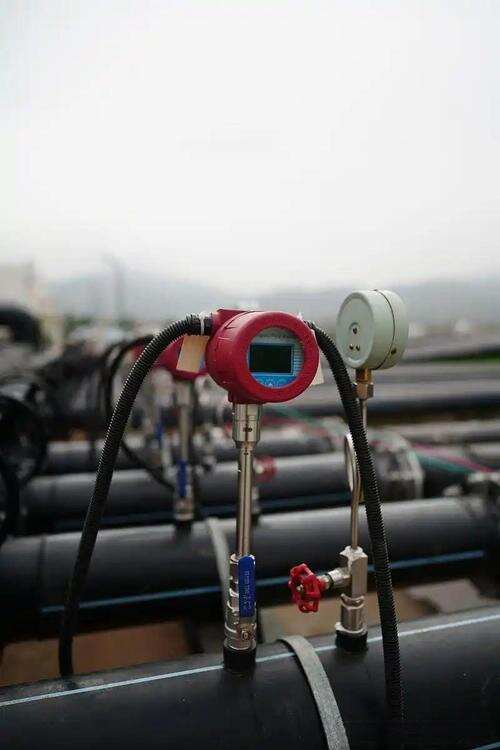
In the field of industrial gas flow measurement, thermal gas mass flow meters have become the preferred instruments in many industries due to their technical principles and performance. It directly measures mass flow by detecting the heat changes when gas flows through the sensor, without temperature or pressure compensation, and is suitable for complex working conditions. Here are its five core advantages:
1. Directly measure mass flow without compensation
Traditional flow meters (such as vortex street and orifice plate) rely on temperature and pressure transmitters for compensation calculations, while thermal flow meters directly output gas mass flow rates (such as kg/h, Nm ³/h), eliminating additional calibration steps and providing more accurate and reliable data, especially suitable for compressed air, natural gas, biogas and other media.
2. Wide range ratio, high sensitivity
The thermal flow metering range ratio can reach 100:1, which can accurately detect extremely low flow rates (such as 0.1m/s) to high flow rates (such as 100m/s), meeting the wide range flow monitoring needs of air compressor exhaust, ventilation system, combustion control, etc., avoiding the "blind spot" problem of traditional instruments at low flow rates.
3. Low voltage loss, energy-saving and efficient
Adopting a design without moving parts and no throttling elements inside the pipeline, there is almost no pressure loss, significantly reducing energy consumption. Long term use in compressed air systems or large pipeline gas monitoring can save a significant amount of energy costs.
4. Strong anti-interference ability, suitable for complex gases
Not affected by gas composition, humidity, or dust, it can measure the flow rate of corrosive gases (such as chlorine and ammonia), mixed gases (such as biogas and flue gas), and high-pressure or vacuum environments, with stability far exceeding that of turbine or vortex flow meters.
5. Flexible installation and easy maintenance
Provide multiple installation methods such as plug-in and pipeline installation, support online installation and maintenance, and do not require production stoppage; Sensors have no worn parts, long lifespan, almost maintenance free, and significantly reduce operating costs.