
 language
News and Information
The Company is Committed To The Production, Sales, Design, Installation, And Maintenance Of Process Instruments And Intelligent Control System Solutions.

The Company is Committed To The Production, Sales, Design, Installation, And Maintenance Of Process Instruments And Intelligent Control System Solutions.
The occasional occurrence of inaccurate measurement results in the actual operation of radar level gauges does not necessarily mean that there is a problem with the quality of the instrument itself. In fact, there are many factors that can affect the measurement of radar level gauges,
This article will raise some factors that may affect the measurement results of radar level gauges for friends.
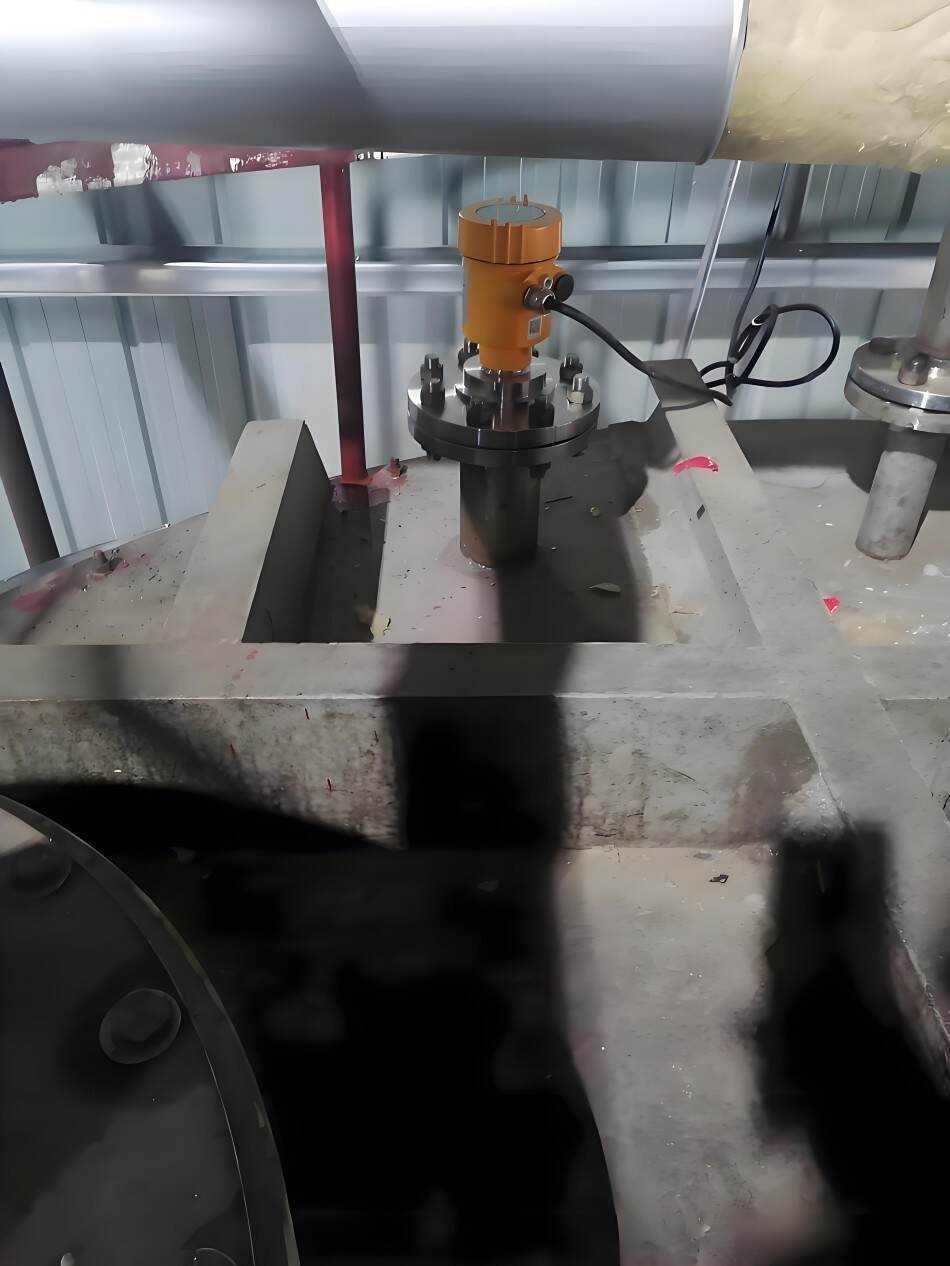
Firstly, let me briefly introduce the working principle of the radar level gauge:
The general principle of a radar level gauge is that the radar emits electromagnetic waves at the top of the tank, which are reflected by the medium and received by the radar. The frequency difference δ f between the received and transmitted signals is proportional to the distance R from the surface of the medium: R=C (velocity) * δ f (frequency difference)/2/K (modulation slope). Since the speed of light C and the frequency modulation slope K are known, the frequency difference δ f can be estimated to obtain the distance R between the radar installation position and the material surface. Then, by subtracting the spatial distance from the radar to the material surface (referred to as the air height) from the known total height of the tank, the height of the material surface can be obtained.
There are many reasons for interference in the signal of radar level gauges, and there are also various sources of interference. However, they can generally be divided into two categories: internal interference and external interference.
1、 External interference
1. Celestial body and celestial electric interference
Firstly, what is celestial interference? Celestial bodies refer to the sun or other stars, so celestial interference refers to the electromagnetic waves they emit that interfere with the signals emitted by radar level gauges. For Tian Dian, everyone is probably unfamiliar with it. We usually understand it as the interference of electromagnetic waves generated by atmospheric, lightning and other ionization effects, or natural phenomena such as volcanoes and earthquakes on the signals of radar level gauges.
2. Mechanical interference
The so-called mechanical interference refers to the significant vibration or impact of external machines that affects the radar level gauge, causing some components inside the radar level gauge to vibrate or even shift or deform, and may also cause the instrument head pointer to loosen, resulting in measurement errors. In this case, we usually add partitions, shock-absorbing springs, etc. to reduce the impact.
3. Humidity interference
When the humidity increases, it will cause a decrease in the resistance of the insulator, an increase in the dielectric number of the dielectric, a fluffiness of the skeleton, an increase in resistance, and thus an increase in leakage current, capacitance, and changes in inductors. In addition, it will cause the gum to soften and the measurement accuracy will also decrease.
4. Chemical interference
Chemical interference usually refers to some corrosive gases, such as acids, bases, etc., whose long-term effects not only damage instruments and internal components, but also conduct electricity with metals, affecting the normal operation of radar level gauges.
5. Thermal interference
During the operation of thermal power plants, their thermal equipment generates a large amount of heat, which in turn causes changes in surrounding instruments and environmental temperature. This is what we call thermal interference, which can affect the components of radar level gauges and further lead to inaccurate measurements.
6. Light interference
The interference of light mainly lies in semiconductor components. Many of the components used to operate instruments are made of semiconductor materials, and semiconductor components will change their conductivity when affected by light. As a result, the normal use of radar level gauges is also affected.
2、 Internal interference
Interference not only comes from external sources, but also from within the radar level gauge, such as interference generated by wires, inductors, capacitors, and other electronic components of power transformers. In addition, internal components can also generate noise interference. Nowadays, most radar level gauges have also begun to improve by adopting high-frequency microwave technology, which greatly improves the performance of level gauges and reduces interference.
The above are some situations where the signal of the radar level gauge may be interfered with. When installing or using the radar level gauge, we can also analyze whether your usage environment will cause these interferences to the level gauge based on the above listed factors. If so
In these situations, it is necessary to take anti-interference measures to ensure that the liquid level gauge can better serve you.