
 language
News and Information
The Company is Committed To The Production, Sales, Design, Installation, And Maintenance Of Process Instruments And Intelligent Control System Solutions.

The Company is Committed To The Production, Sales, Design, Installation, And Maintenance Of Process Instruments And Intelligent Control System Solutions.
How to install the integrated orifice flowmeter correctly? What are the standard points?
Integrated orifice flowmeter is a commonly used flow measurement instrument, widely used in process control and measurement in fields such as petroleum, chemical, metallurgical, power, heating, and water supply.
There are many issues to pay attention to when installing an integrated orifice flowmeter. Today, we will provide a detailed introduction to the installation points of the integrated orifice flowmeter, hoping to be helpful to everyone.
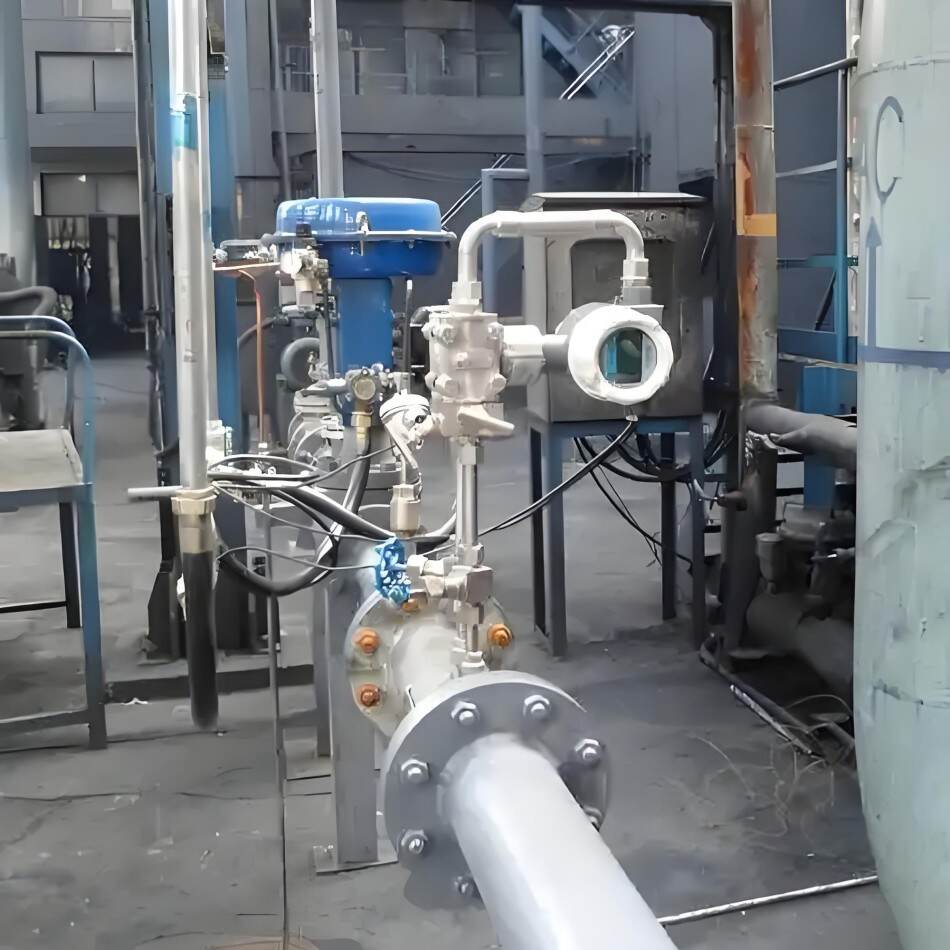
Key points of installation technical standards for integrated orifice flowmeter:
Before installation, the orifice plate should be checked to ensure that the quantity and size of the throttling devices meet the requirements of the pipeline installation position.
2. For newly installed pipeline systems, orifice plates must be installed after pipeline flushing and cleaning.
3. Note that the installation direction of the "orifice plate" should face the stream.
4. The middle of the orifice plate should coincide with the centerline of the pipeline, and the concentricity error should not exceed 0.015 (1/-1).
When installing orifice plates in pipelines, it should be ensured that their end faces are perpendicular to the pipeline axis, with a perpendicularity error of no more than 1.
To avoid distortion in the transmission of differential pressure signals, positive and negative pressure pipelines should be laid as close as possible, and anti freezing measures should be taken in cold regions. Electric heating or steam insulation can be used, but false pressure differentials caused by overheating and vaporization of gases generated in the measured medium and pressure pipelines should be prevented.
7. The installation of the orifice flow meter of the integrated orifice flow meter must be tight and free of leakage. Therefore, installation work must be carried out before pipeline pressure testing.
8. Pressure conduits should be laid vertically or diagonally, with an inclination of no less than 1:12. For fluids with high viscosity, the inclination should also be increased. When the transmission distance of the pressure difference signal is greater than 3 meters, the pressure pipeline should be inclined in sections, and the gas collector and settling device should be installed at each high and low point of the nozzle.
9. Pressure conduits should be made of pressure resistant and corrosion-resistant materials according to the properties of the measured medium, with an inner diameter of not less than 6mm and an upper limit of length not exceeding 16m.
When the orifice plate is installed on the vertical main pipeline, the position of the pressure tapping port can be arbitrarily selected on the plane of the pressure tapping device. The orifice plate is installed on a horizontal or inclined main pipeline.
Keywords of this article: installation of orifice plate flowmeter, standard orifice plate, flowmeter, nozzle flowmeter, steam flowmeter